
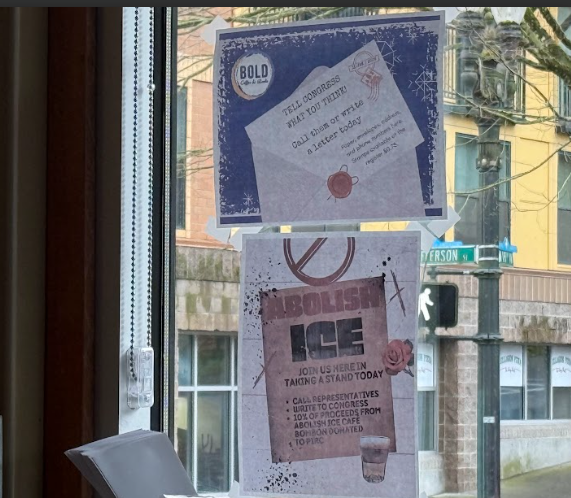
Immigration and Customs Enforcement (ICE) is being used to unfairly treat our brothers and sisters. Peaceful protesters across the country and in Portland, including the elderly, disabled people, fellow students and young children, have been tear-gassed and targeted for exercising their freedom of speech. The First Amendment of the Constitution protects the free exercise of speech, the press, assembly and petition.
Junior Izzy Eggleston added that she has met “many undocumented families just trying to start a new life free from their abusers or violence. [The situation with ICE] is not right, and through protests and reaching out to my government representatives, I have been trying my best to fight for them and human rights as a whole.”
In what is seen as an attempt by the government to silence voices, executive orders and brute force are being used to control the people. According to Trac Reports, as of Feb. 7, 68,289 individuals are held in ICE detention, under both ICE and the U.S. Customs and Border Protection (CBP). In 2025, 32 people died under ICE custody, with at least six more as of January.
Congress continues to grant large sums of money ($170 billion) to the Department of Homeland Security (DHS) for immigration enforcement, enhancing its ability to target and detain immigrants across the United States. ICE recently purchased large warehouses in Texas and Pennsylvania to house detainees.
What matters is that communities continue to fight to protect one another and stay informed about the issues on which they choose to take action.
For some students, protests—such as walkouts to city hall—are a way to make their voices heard, though there is inherent danger in doing so. Guidance from MPR News recommends that protesters avoid threatening others, refrain from destroying property, comply with police or ICE orders when needed, and seek legal help to better understand their rights.
“Protests often bring on emotions of anger and hope for me,” said senior Tilly Dettling. “While the motivation to protest is often rooted in dissatisfaction and disgust with the government, seeing people of all ages coming together for the same cause sparks hope within me. I am hopeful that our collective anger and passion can lead to something larger, and that something can change.”
It can be hard to keep hope when change is slow, but continuing to show up for each other is key. Aside from direct protest, calling or writing to state and federal representatives, voting, attending city council and school board meetings, or even just talking about the issues you care about helps foster understanding.
Dettling emphasized, “At the end of the ICE protest near Roosevelt, I was surrounded by students and adults from all over the Portland area. I felt hope for the future since there were so many people willing to protest. Yet, I knew that the fight was far from over, but I am hopeful that each person would continue to show up and act for what they believed was right.”