
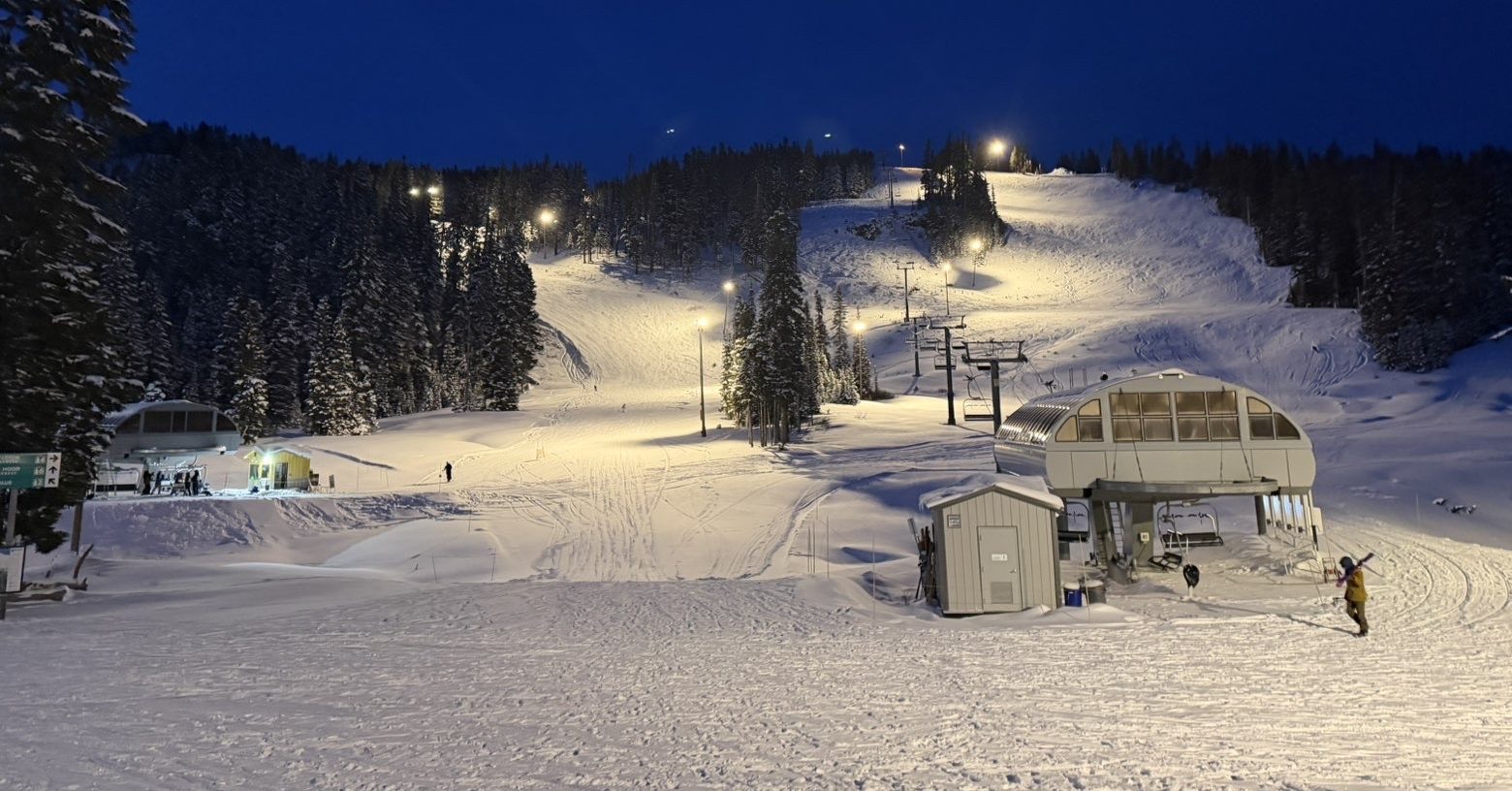

This winter, the snowpack in Western states has hit historical lows, and Oregon is no exception. According to NBC News, Oregon, Colorado and Utah have reported their lowest statewide snowpack since the 1980s, which is as far back as records go. Temperatures during the day at Mount Hood ski resorts have reached up to 60 degrees Fahrenheit in mid-January, compared to the usual 35 to 40 degree range.
As a result, ski resorts on Mount Hood have had shorter seasons than ever before. Mt. Hood Meadows opened for the season on Dec. 23, over a month later than the previous year, according to KGW8. Skibowl announced on Instagram that as of Feb. 1, “Skiing and Riding operations have been suspended until further notice.”
Chief meteorologist for KGW-TV, Matt Zaffino, says that the snowpack in the North Cascades is about 22% to 35% of normal snowfall. He worries about the water supply in the months ahead due to the lack of snow.
“Good and healthy snowpack is basically a reservoir, and when it melts gradually, it’s constantly feeding our streams, lakes and rivers, and it helps supply water to farmers, ranchers and irrigators,” Zaffino said. “Not having that reservoir means we’re going to have a smaller water supply in the warm months ahead.”
Snow sports at Lincoln had to navigate the lack of snow, which resulted in shorter seasons and delayed competitions. Junior Nathan Ratcliffe, a member of the snowboard team, had his first competition of the season on Feb. 8.
“The course at the first competition was pretty challenging because the snowpack was really low,” Ratcliffe said. “There were some areas where you had to avoid rocks.”
The alpine ski team has also faced race delays and cancellations, which worries head ski coach Robin Chapin.
“We hope to get races rescheduled because if we don’t have enough events, our league won’t qualify for state,” Chapin said. “The boys team we have this year could win state, and the girls should do really well at state.”
Ratcliffe cares deeply about snowboarding and has felt let down by the lack of snow this season.
“I love being able to snowboard. It’s one of my passions,” Ratcliffe said. “Not being able to go up as much and having worse quality snow, it’s not as fun. Just seeing the rocks and the dirt and the plants poking through everywhere on the mountain is really disappointing.”
Zaffino encourages young people to vote and make their voices heard if they are passionate about clean energy and reducing their carbon footprint. Lower carbon emissions and cleaner energy help mitigate climate change, which is the primary cause of abnormal weather patterns becoming more frequent.
“Technology is going to get us out of this, and by that I mean finding clean sources of fuel where we’re not adding more CO2 to the atmosphere, and putting the pressure on our elected officials to do those kinds of things to help mitigate climate change,” Zaffino said.