
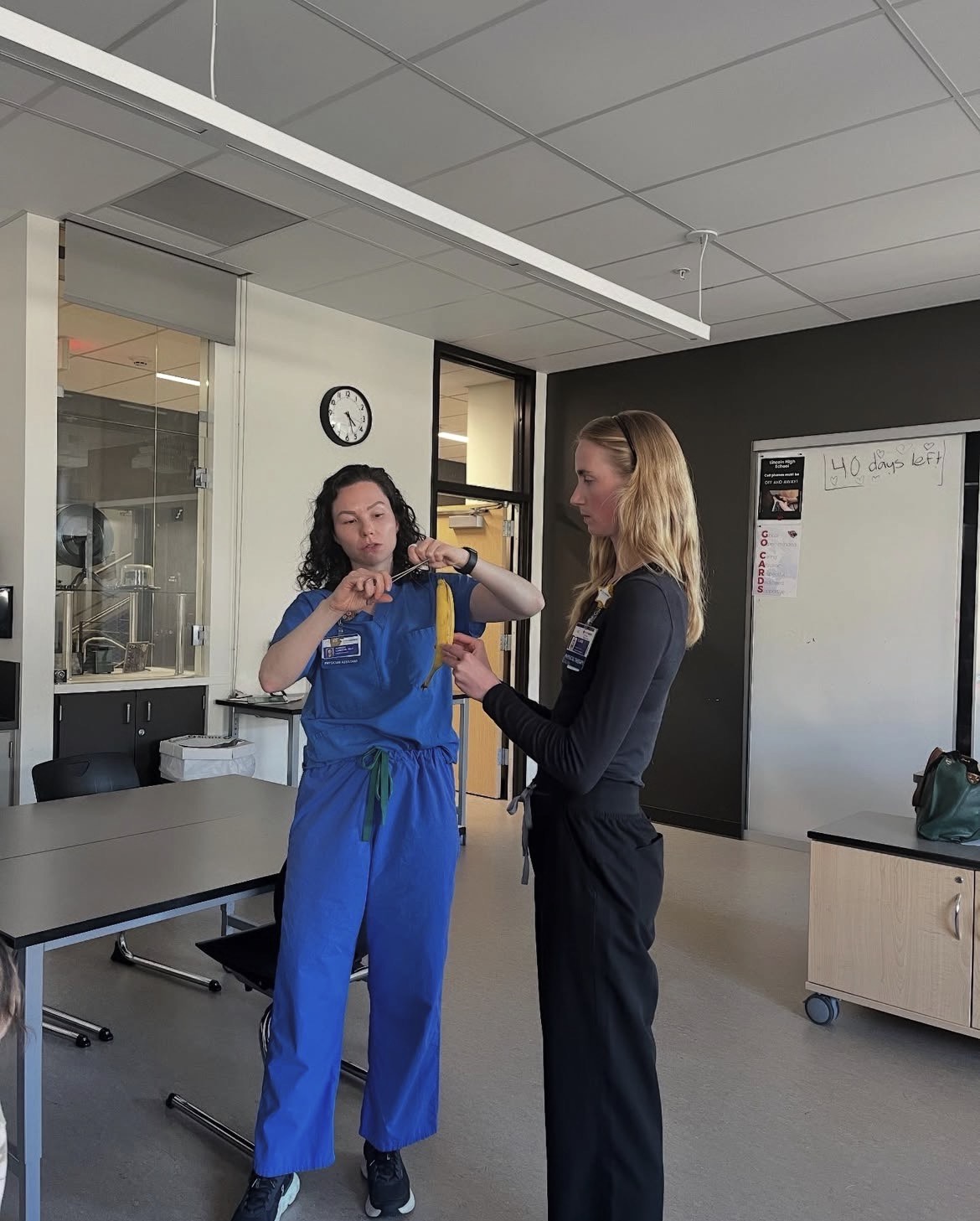
Lincoln’s club Cards in Med (short for medicine), helps students explore and pursue medical professions. Cards in Med members also connect socially and learn how to become healthy adults.A 2021 article from the National Library of Medicine lists the long and short term positive effects of preventative health information.
“In the long term, preventive health information has been shown to effectively address substance use and addiction, mental health problems, dating and relationships, and physical fitness. In the short term, healthy students have better educational outcomes – they get better grades, have better graduation rates, and feel more connected to their peers and teachers.”
What makes Cards in Med different from health curricula is the professional speakers and hands-on experiences it offers.
Senior Artina Bojnordi is a co-leader of Cards in Med and has learned a lot from the club.
“We had a heart surgeon come in and talk about all of his experiences as a trauma surgeon. He talked about all of the really amazing procedures he got to perform, what it meant to be a trauma surgeon, especially in his era and also today,” Bojnordi said.
Along with guest speakers, Bojnordi shares how Cards in Med offers unique hands-on learning experiences. “They taught us how to suture [with] a banana and then also a couple of cool skills like using forceps and using tweezers,” Bojnordi said.
Dave Valenzuela is an anatomy and physiology teacher and a teacher associate with Cards in Med. He believes that while learning about medical fields is crucial, Cards in Med has other benefits for students as well.
Valenzuela says Cards in Med is a great way to find what suits you, whether that’s the medical field or not. He believes the club teaches members and gives them confidence to pursue what their passions are.
Bojnordi agrees that following what is best for yourself is important.
“We had a biotech person come in and talk about her experience, like going through med school, deciding that wasn’t the path for her. So she switched kind of to more of the engineering side of medicine and now she develops pharmaceutical drugs for cancer patients,”said Bojnordi.
Bojnordi appreciates hearing how medical professionals make career decisions.
“Especially listening to all these doctors talk about ‘I had to go through eight years of medical school, and then I had to go and take a few years off,’ you learn a lot of things about what it means to follow your own path, but also just keep pushing towards your goals,” Bojnordi said.
Cards in Medicine meets in room 525 during lunch on Thursdays and are always looking for new members!