Content warning: Contains mentions of assault.
On March 18, American labor and civil rights leader Dolores Huerta broke her silence in a high-profile report featured in The New York Times, alleging that César Chávez sexually assaulted her.
Many other women spoke to The New York Times about being abused by Chávez, who died in 1993. A story in The Guardian from April 20 shares the story of Jennifer Andrea Porras, who alleged that Chávez had “groomed them at a young age, and eventually sexually harassed them on multiple occasions during their time spent at the day laborers’ headquarters in the summer of 1990.”
Many institutions and cities are now deciding what to do about streets and buildings named in honor of Chávez, including here in Portland.
César Chávez School, in North Portland, is one of three elementary schools in Oregon named after Chávez. According to Chávez principal Dr. Rebecca Levison, they are seeking a name change.
Levison shared the PPS Administrative Directive Procedures for Naming School Property, which provides information on how long the renaming process takes and how members of the community can get involved in the change.
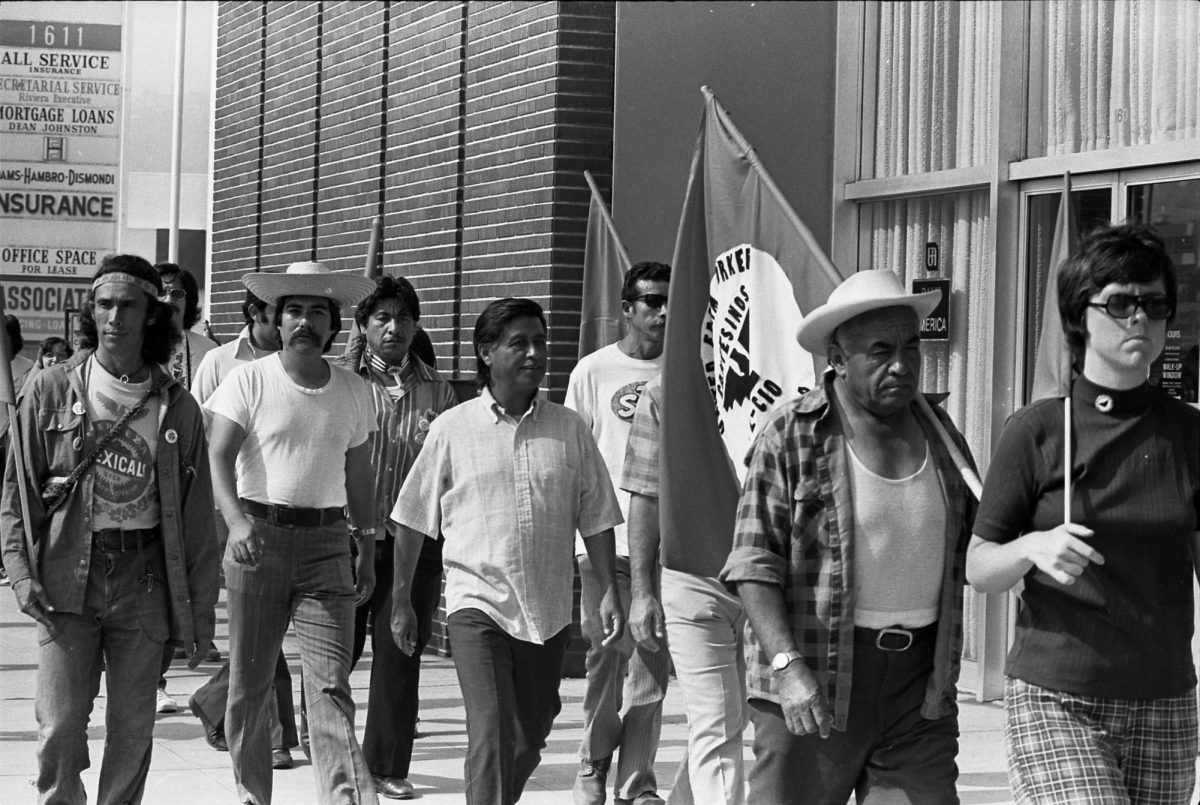
Another regional landmark named after Chávez is the street that, until 2009, was known as 39th. The name was changed to César Chávez Blvd after a campaign led by Marta Guembes, the co-chair of the committee Por La Causa, which was formed to advance the campaign. Por La Causa wanted to honor Chávez, as he led many of the nonviolent protests during the farm workers movement in the 1960s. After much debate and many failed attempts, the fight to rename the street in honor of Chávez succeeded when the Portland City Council voted to do so.
Guembes describes the process as long and rigorous.
“To be able to rename a street, the process is to gather 2,500 signatures from people who live in the city. Then you have to go through the process of having forros on gente de la comunidad,” said Guembes.
In English, forros on gente de la comunidad means coordinating with the whole community and getting their approval.
Jose Romero, another co-chair member of Por La Causa, explained how people involved in the process faced many racist comments.
“They were terribly mean. They threatened us. Then one guy got up and said… You [should] use that money to teach these damn kids how to speak English. This is America, isn’t it? Or another guy would say, if you named that street after César Chávez, there’s going to be drug dealing and prostitution,” said Romero.
Romero has a long history of working for social justice. He was involved in the farm workers movement and marched alongside Chávez and Huerta.
“The man doesn’t make the movement,” said Romero. “The movement makes the man.”
Both Romero and Guembes are once again involved in renaming the street. They are hoping the new name will be Campesinos Blvd in recognition of the farm workers’ movement, and not just a single person.