
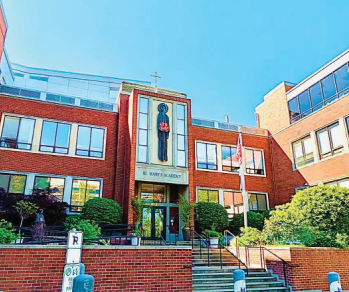
Less than a ten-minute drive from Lincoln is the site where one of the most influential Supreme Court cases in American history, Pierce v. Society of Sisters, originated. 101 years later, the Court’s decision continues to affect liberties from abortion rights to privacy protection.
First, some history. In 1922, the Ku Klux Klan influenced almost all aspects of life throughout the state, from the economy to the government. The governor, Walter Pierce, was a Klan member. To achieve the goal of a homogenous (white and Protestant) American society, the Klan targeted Catholics and immigrants. The Klan’s widespread support allowed them to pass the Oregon Compulsory Education Act, mandating that all children attend public schools. This act closed private schools, which at that time were mostly Catholic.
“The intent behind [the Compulsory Education Act] was that [the Klan] knew the Catholics ran a lot of schools throughout the state and [they] were going to make it illegal for them to do so as a way to try to silence them,” said Andy Buhler, the current Dean of Communications at St. Mary’s Academy.
St. Mary’s Academy is the oldest continuously operating secondary school in Oregon. The academy sued the state of Oregon for violating its constitutional rights. The case eventually reached the Supreme Court.
In a unanimous opinion, the Court decided the Act violated a parent’s right to choose where their children attend school.
The Court’s decision in Pierce v. Society of Sisters affects more than just religion. It helped establish substantive due process, a legal doctrine allowing courts to protect the implied rights of the Constitution. Pierce has been cited in multiple other landmark cases, including the case that formerly protected abortion rights at the federal level, Roe v. Wade. Roe was overturned by Dobbs v. Jackson Women’s Health Organization, which also cites the case.
Now, it is being memorialized by the Stephen L. Griffith Portland Supreme Court Project, a student-led organization that preserves the legacy of Supreme Court cases originating in Portland.
“[Pierce v. Society of Sisters shows] the spirit of Portland, always fighting back against laws that we find unjust,” said Ian Conine Reyes, a Lincoln student leader of the Portland Supreme Court Project.
