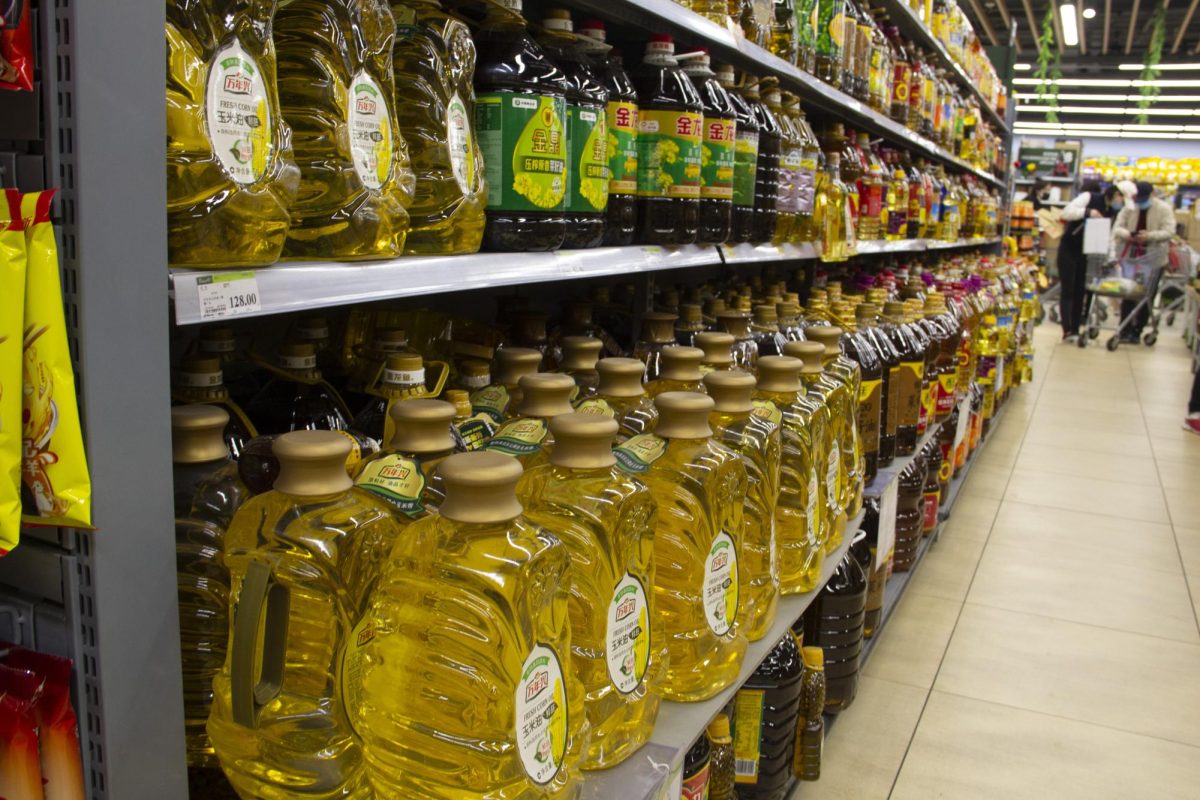
The benefits or dangers of seed oils have recently surfaced as one of the most controversial nutrition debate topics on social media. Examples of seed oils include soybean, corn, canola, rapeseed, sunflower, safflower, cottonseed, grapeseed and rice bran oils.
There are conflicting arguments and scientific research for and against seed oils.
A 2013 study published in The British Medical Journal found that people who consumed higher amounts of vegetable oil had a higher risk of death by cardiac-related events, although it was a relatively small sample group.
On the other hand, a 2014 study included in the book “Circulation,” the American Heart Association (AHA) found that people who consumed linoleic acid (the main fat in seed oils) actually had a lower risk of heart-related risks.
Despite the mixed evidence, social media users and influencers have strongly shaped public opinion.
“I think seed oils are pretty negative. They’re just mainly for taste,” said senior Nursun Schmidt. “[Seeing claims about cancer risks] really makes me rethink how bad they really are.”
At the same time, Schmidt acknowledged the risks of online misinformation.
“If you just see something on the internet, it could be very misleading,” said Schmidt.
Brendan Ruh, known online as Santa Cruz Medicinals, is one of the largest social media influencers on the internet. He focuses on the alleged harms of seed oils. In his videos, he goes around grocery stores and overhauls people’s shopping carts to make them seed oil-free, often getting millions of views. We reached out to Santa Cruz Medicinals for a comment on the topic, but did not receive a response.
Health teacher Jacob Hockett disagrees with many of these nutrition influencers.
“I don’t think seed oils are inherently bad. In moderation, they can be part of a healthy diet, and there isn’t strong evidence that they’re harmful for most people,” said Hockett. “Misinformation can make people unnecessarily afraid of seed oils and believe they are dangerous without scientific proof.”
According to Hockett, nutritional advice “should be based on credible sources and research” because false claims can lead to “poor food choices, anxiety about eating, and unhealthy diet restrictions.”
Robin Brown, a registered dietitian with Team USA and the team dietitian for the U.S. Olympic rowing program, said many of the viral claims about seed oils don’t match the science.
“Seed oils are a healthy source of unsaturated fats,” Brown said. “The claims made on social media about them being ‘toxic’ are myths.”
Brown said that for athletes and students trying to make sense of nutrition debates online, the most important first step is checking credibility.
“When evaluating nutrition advice online, it is important to note who the publisher is,” Brown said. “If the information is provided by a registered dietitian, then you can be confident that the information is based on scientific research and