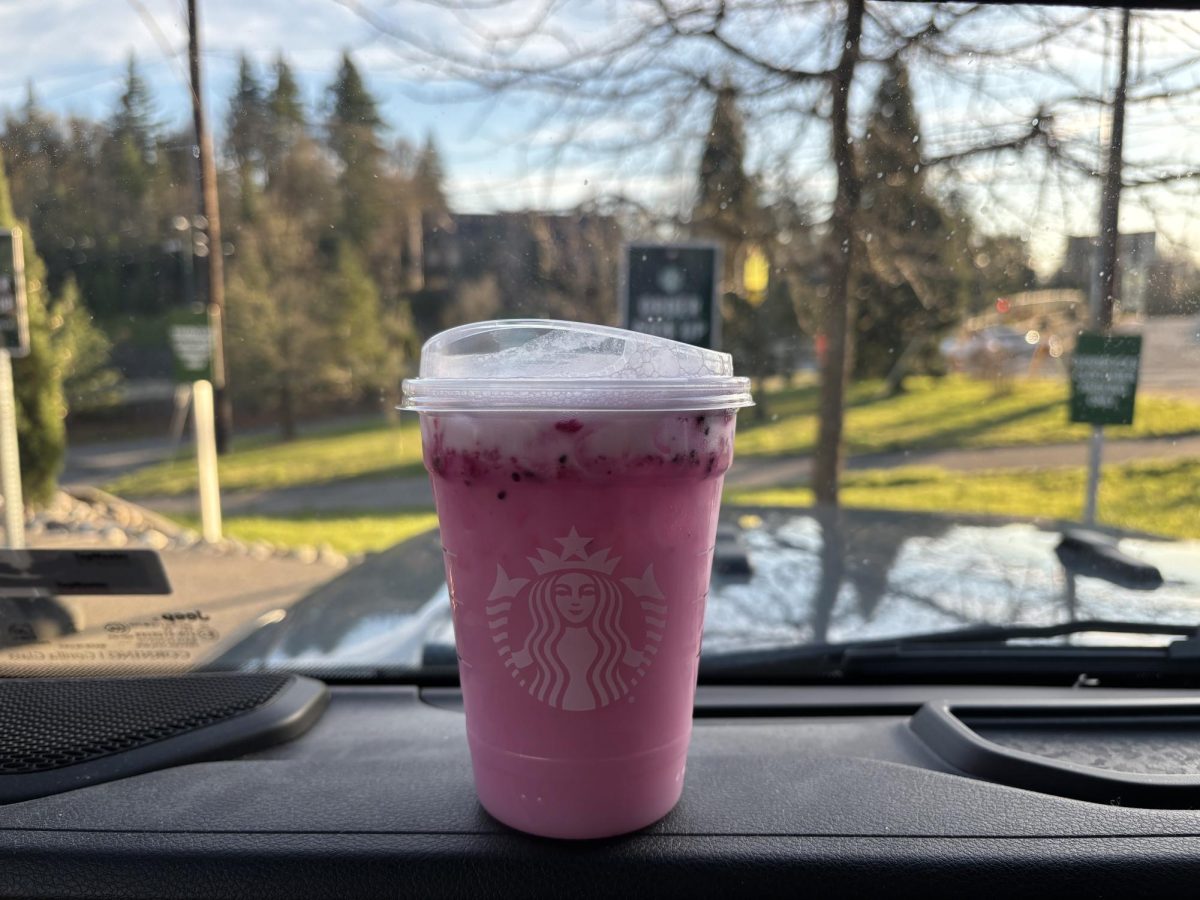
Whether you start your morning with a coffee or kick through your midday with an energy drink, most of us like some kind of beverage to keep our energy up, stay hydrated or even just for fun. Through social media and the internet, daily beverages have become a culture; one that I like to call drink culture.
Drink culture relates to fun trends and sometimes promotes positive habits such as hydration. However, I do think that it should be evaluated in the context of larger issues, such as consumerism and health.
Consumerism is sort of a loaded term, so I should clarify that I myself am a con- sumer. Along with an iced chai or Dutch Bros Rebel, I love the occasional Red Bull. Their sponsorships in extreme sports have led me to be loyal to the brand beyond just the can. But $12 drinks?! It seems that prices for coffees and matchas are constantly rising, partly because companies have identified high demand. It feels as though businesses want you to think you need your daily drinks either physically to support your needs or socially, and feel a part of something. For example, companies like Starbucks have apps that serve as incentive programs, with consumers able to earn free drinks after a certain number of purchases. They even had an exclusive bear-shaped cup that customers raced to buy.
In terms of health, my intention is not to place judgment but only to encourage reflection. Trends are fun, but it’s important to recognize that anything that is known to negatively impact health should not be normalized and followed blindly without consideration.
Students come to school with a large sugary drink instead of their breakfast or lunch. According to UC Health, teens require anywhere from 2200-5000 calories daily in basic food groups such as carbohydrates, vegetables, and proteins. As stated by Cara Marris, a dietitian interviewed by UC
Health, fueling matters especially for teens because they are still growing and “form- ing organs and bones.” Even if a drink can make you feel full and give you energy, it simply cannot provide the necessary nutrients to support a developing body.
Caffeine consumption has also been a topic of drink discourse. Some people don’t drink it at all, while others insist that they must have two cups of coffee a day. Caffeine is highly studied and considered fairly safe and beneficial, but can become an issue when it begins to have negative side effects.
According to Dr. Stephen Devies as interviewed by American Medical Association (AMA), “High blood pressure, palpitations and arrhythmias are other possible risks with high intake of supplemental caffeine.”
In the end, it all comes down to balance. A focus on hydration is a great thing, and some morning caffeine can undoubtedly improve your day. While participating in trends that bring you joy, avoid depending on habits that negatively impact your health.